ANTIQUE KILIMS, RUGS AND TEXTILES FROM ANATOLIA TO CENTRAL ASIA
Form and color carry forward ancient traditions — an art form with roots that reach far back into history.
We see ourselves as a small oasis that offers a glimpse into this world — an opportunity to become acquainted with it through observation and reflection, and perhaps also through the sharing of personal impressions.
These weavings are not merely floor coverings; to us they are messengers. They are woven by women who, through image, color, and form, convey their traditions and meanings — a view of the world that emerged long before the written word. Small details may also reveal something about the weaver herself and her personality.
There are no biographies and no cult of personality. Yet within their immediate cultural environment, the importance of the message has always been an essential part of identity and of expressions that reach beyond everyday life.
It is art. These are images that can be felt or understood across cultural boundaries.
Many of the objects on display can also be found in museums and collections. Yet there are still too few places where they can be publicly experienced. Antique kilims do not reveal themselves at first glance. Each piece is unique, and none originate from manufactories.
They represent the still too little known — and often insufficiently respected — transmission of history, beauty, and ways of perceiving the world, expressed by weavers of nomadic or rural origins. The forms have been preserved for thousands of years and passed from mother to daughter — without drawings, without outside influence.
They had a profound influence on the art of the early twentieth century, a fact that even today remains insufficiently recognized and appreciated.
Trend-oriented producers have always drawn from this treasure. That is unavoidable. Yet when an authentic weaving is placed beside a copy, it usually becomes very clear, very quickly, where — and how — meaning is truly conveyed.
NEW KILIMS WOVEN BY CENTRAL ANATOLIAN WOMEN
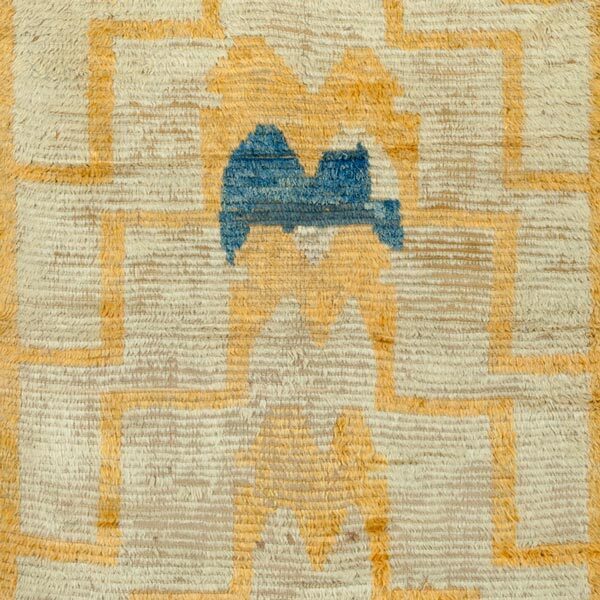
Inspired by museum-quality Anatolian kilims with the finest color palettes, dating from approximately 1700 to 1820.
Antique kilims are often long and narrow, reflecting the dimensions of black nomadic tents, and they are naturally delicate. For this reason, the formats of newly woven kilims are adapted to the proportions of contemporary interiors.
Excellent wool from the region is used, dyed with natural pigments whenever possible within the color range typical of the period between 1700 and 1820. The kilims produced in this way are durable, of great beauty, and continue the tradition.
The weavers are farmers, some of them with a nomadic background. They weave at home during the winter months, when the fields and animals require less attention. The women are highly motivated — proud of their weaving skills and satisfied with the good price they are able to obtain for their work.
The project was initiated about thirty years ago by young traders in Konya and continues to thrive even today, despite challenging economic conditions. They dye the wool themselves and take responsibility for the final result and for selling the pieces to retailers.
We commission kilims that are usually inspired by early fragments from the region and their remarkable color palette. The dimensions are adapted to our interiors, since the originals are traditionally very long and narrow. Even when colors and forms are specified, the weavers take pleasure in playing with subtle nuances.
They are masters of their craft — and they know it. Their kilims clearly reflect this confidence. The finest among them come very close to the grandeur of the kilims woven in the region around 1800.
AUTHENTIC TRIBAL JEWELLERY AND ORNAMENTS FROM ASIA AND AFRICA
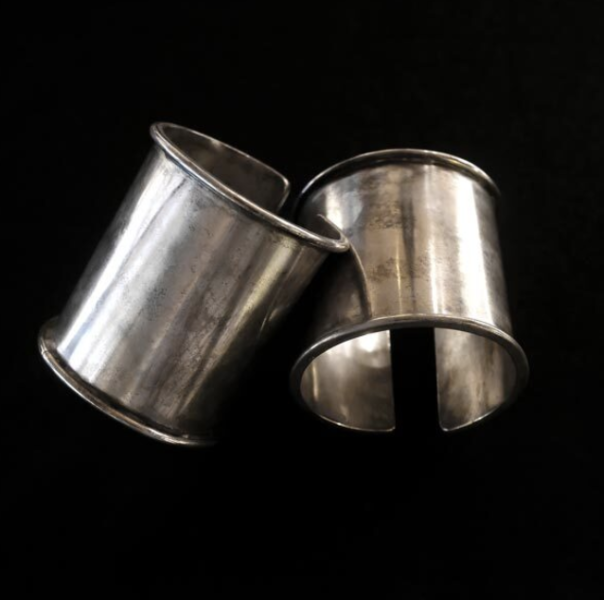
Bracelets, rings, necklaces and pendents crafted by local artesans according to their tradition and personal taste
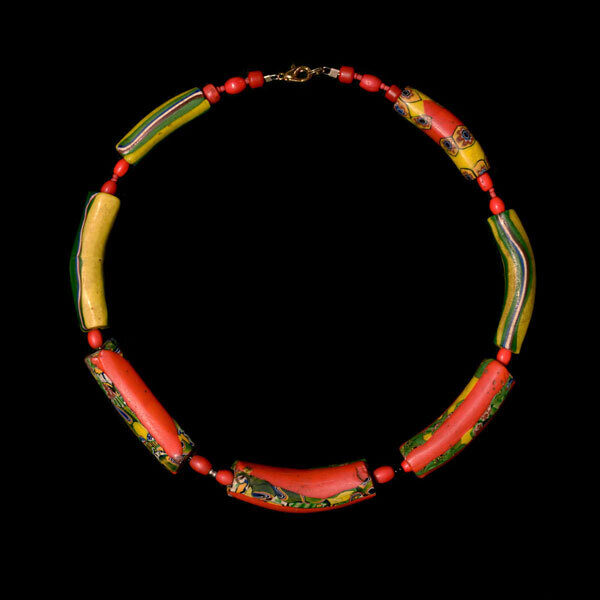
The materials include silver and beads made from coral, lapis lazuli, turquoise, amber, agate, and antique glass from various periods. The oldest beads were drilled from softer stones, shells, and bone more than ten thousand years ago and were worn as adornment.
We are pleased to present this remarkable historical range through one of the finest publications on the subject: The History of Beads from 30,000 B.C. to the Present by Lois Sherr Dubin.
What many people do not realize is how long jewelry and beads have been traded across vast distances. Arlette Bollag began collecting them more than forty years ago. She composes necklaces whose beads originate from the same period and cultural context.
This is not only about history—people have always adorned themselves. Jewelry may reflect the cultural background in which one grew up, but it does not have to.
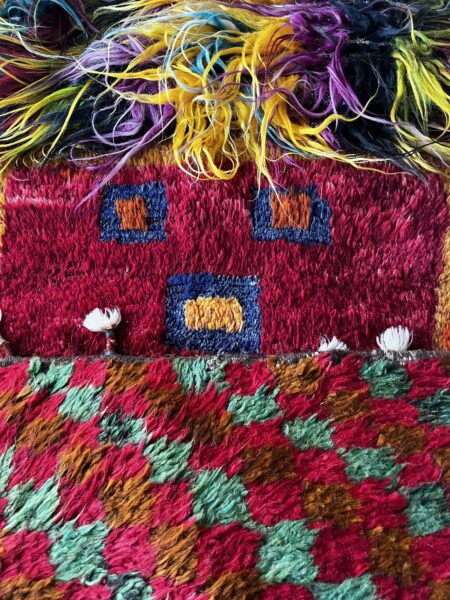
TÜLÜ, FILIKLI, SIIRT
From village and yayla. Knotted and woven for cold nights in the mountains. It is an ancient tradition.
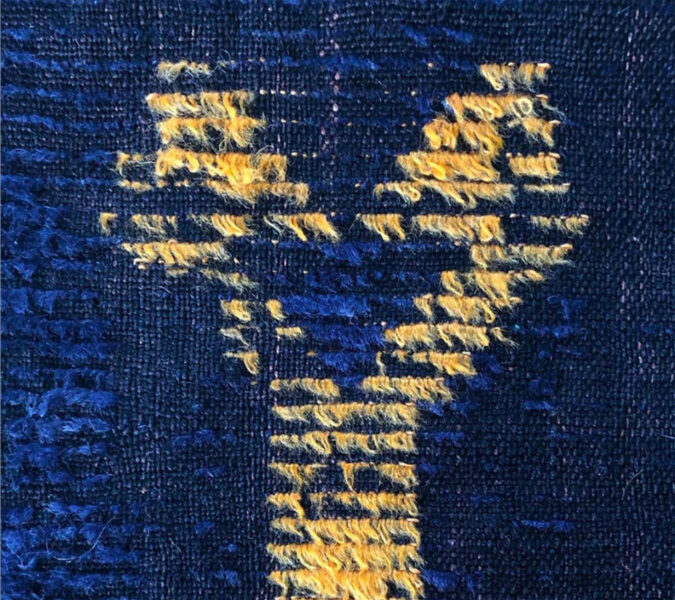
The ornaments can already be found in wall paintings from the same region. They have been passed down from mother to daughter for generations.
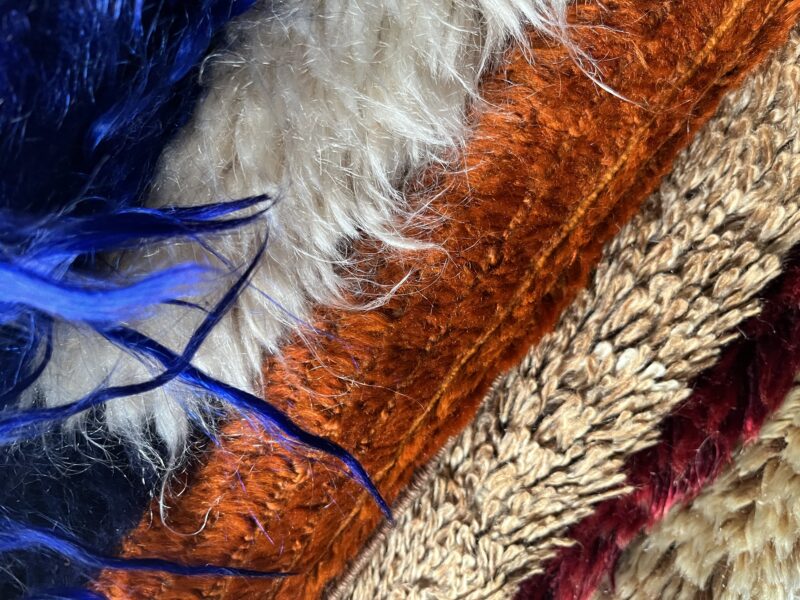
Tülüs — from tüylü, meaning feathery or loose — were often knotted on the alpine summer pastures, the yayla. Similar to Switzerland, livestock breeders lived in the village during winter and moved to the yayla in summer. The difference lies in scale: a yayla can extend across vast landscapes. People lived in tents or simple stone shelters. Sheep and goats were shorn, the wool washed, spun, dyed, and then knotted into soft, deep-pile tülüs on small portable looms, with several woven wefts between the knotted rows.
During the day the tülüs were rolled up; at night people slept on them. Depending on the climate and fertility of the land, this seasonal movement could be horizontal across the landscape or, as in the Alps, vertical.
Only relatively recently have tülüs and filiklis appeared on the market, and today there are some very fine new productions, either knotted by women in their homes or in small workshops. They have never been mainstream and probably never will be. Yet they have always fascinated us.
In other regions of the world with similar ways of life, such sleeping rugs are also known. All of them are functional — but they are also much more than that. One can sense this immediately.
About Us
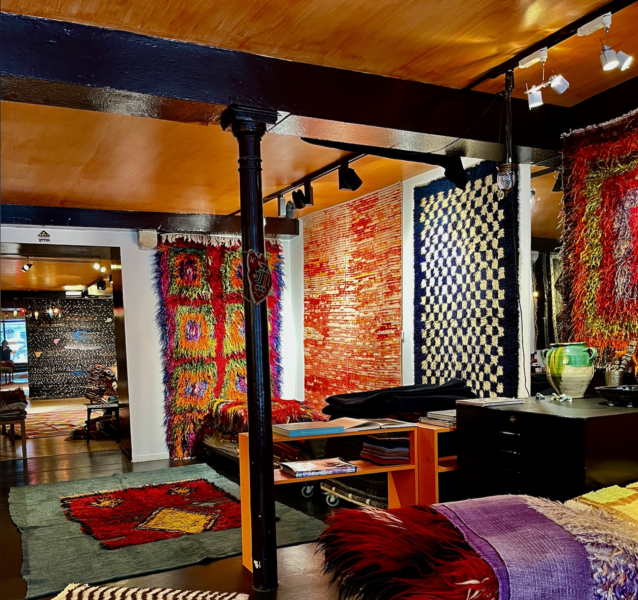
Nomadenschätze was founded in 1979 by Arlette Bollag and Toni Hutmacher and has been located in this lively and inspiring alley since 2009.
Our very first exhibition took place at the Hotel Palace in Gstaad in January 1979. Arlette Bollag and Toni Hutmacher installed an Uzbek yurt, inside which the haute volée gathered during après-ski. Excellent objects, a slightly surreal and memorable beginning to a long journey with many stations, encounters, and a strong emphasis on sharing knowledge.
Photographs from our history from 1979 to today can be viewed above.
The Alley and Our Neighbourhood
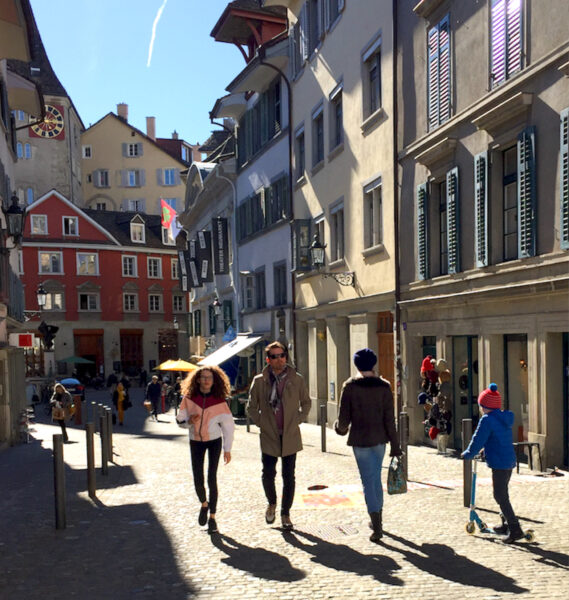
In the lively Neumarkt, the Niederdorf still retains something of its village character, right down to the generous fountain from which one can drink.
Next door, in the guild house where Lenin once planned the great revolution and where the communist circles of Switzerland once met, the Theater Neumarkt now stages bold productions. The impressive Grimmenturm was once slated for demolition by city politicians; today the adjoining pink building houses the city’s architectural archive, containing more than 150,000 photographs and plans.
When winter gives way to spring, the alley becomes a living room for residents and passers-by. People sit in the sun, have a drink, read, or talk with those at the next table. At Mabilio Ramos’ Comestibles one can choose from a wide selection of food, or at the newly opened kiosk at the top of the alley, Hakan and his wife serve warm Kurdish sandwiches, lentil soup, and excellent salads. Or one may settle into one of the fine restaurants nearby.
The shops are unique. Most grew out of the passion of their owners, who possess deep knowledge of their fields. Each follows its own path, yet many have joined together in the association Qim1, which successfully represents the various interests of the neighbourhood.
The alley is alive — people coming and going. From the nearby school come children and teenagers, from the courtyards cats wander out, and from the museums arrive fascinated visitors discovering the city anew.
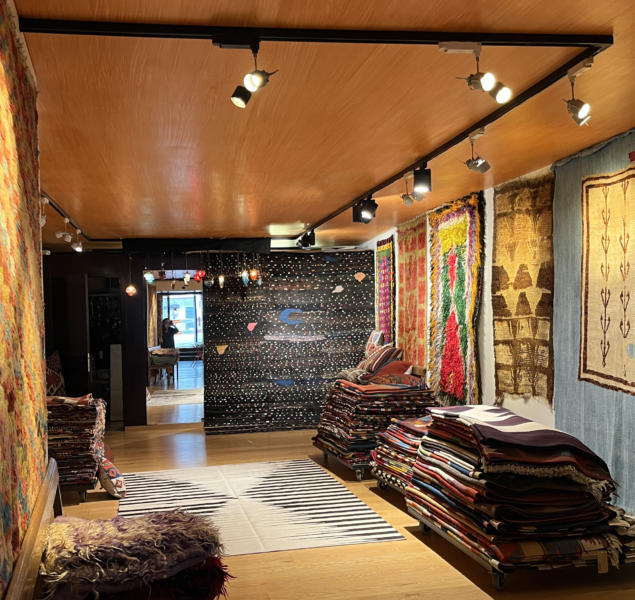
Nomadenschätze at Neumarkt — an oasis of colour. For all who are curious and would like to explore.
Discreet guidance by our knowledgeable multilingual team:
ARLETTE BOLLAG, Hassan Kerrouch, Merlin L. Platt, Muriel Kuoppala Lässer
It is not always an easy balance between a shop and a place with museum-like functions — or, if you prefer, a cultural bridge. This has been our intention and our practice since the foundation in 1979. Library to browse and consult specialized literature.
SERVICES :
Restoration and valuations for objects corresponding to our field of expertise: unique pieces with a traditional nomadic or rural background from Turkey, Iran, Afghanistan and Uzbekistan. Advice on restoration and cleaning.
Please send inquiries by email, including photographs.
EVENTS
These are announced on our website. If you would like to be informed in advance about lectures or other special evenings, please share your email address with us.